The Institute for Women’s Policy Research has spent decades building a rich library of research that shapes federal legislation, informs state policy, and gives journalists the data they need on gender equity. But IWPR’s digital presence hadn’t kept pace. The existing site was static and served more like a digital archive, with only about 10% of homepage visitors clicking through to interior content. A significant share of IWPR’s pages weren’t showing up in search at all, meaning some of their most important work simply wasn’t findable, at a moment when their voice had never mattered more.
The Approach
From Research Repository to Engagement Hub
Teal conducted listening sessions with IWPR staff and leadership, an online survey with key audiences, a content audit, and an SEO review. We discovered that:
The site organized content around a confusing blend of priorities, pillars, and content types.
Research was largely locked inside PDFs, invisible to search engines and hard to share.
IWPR’s experts were buried and disconnected from their own publications.
Teal worked with IWPR to center architecture and content decisions on their primary audiences – advocates, policymakers, journalists, and researchers with a shared goal of transforming iwpr.org into a platform that equips every visitor to discover, connect, and act. IWPR needed an engagement hub, not an archive.
The Work
The Architecture
Teal restructured the site around how audiences looked for content, rather than how IWPR thought about itself internally:
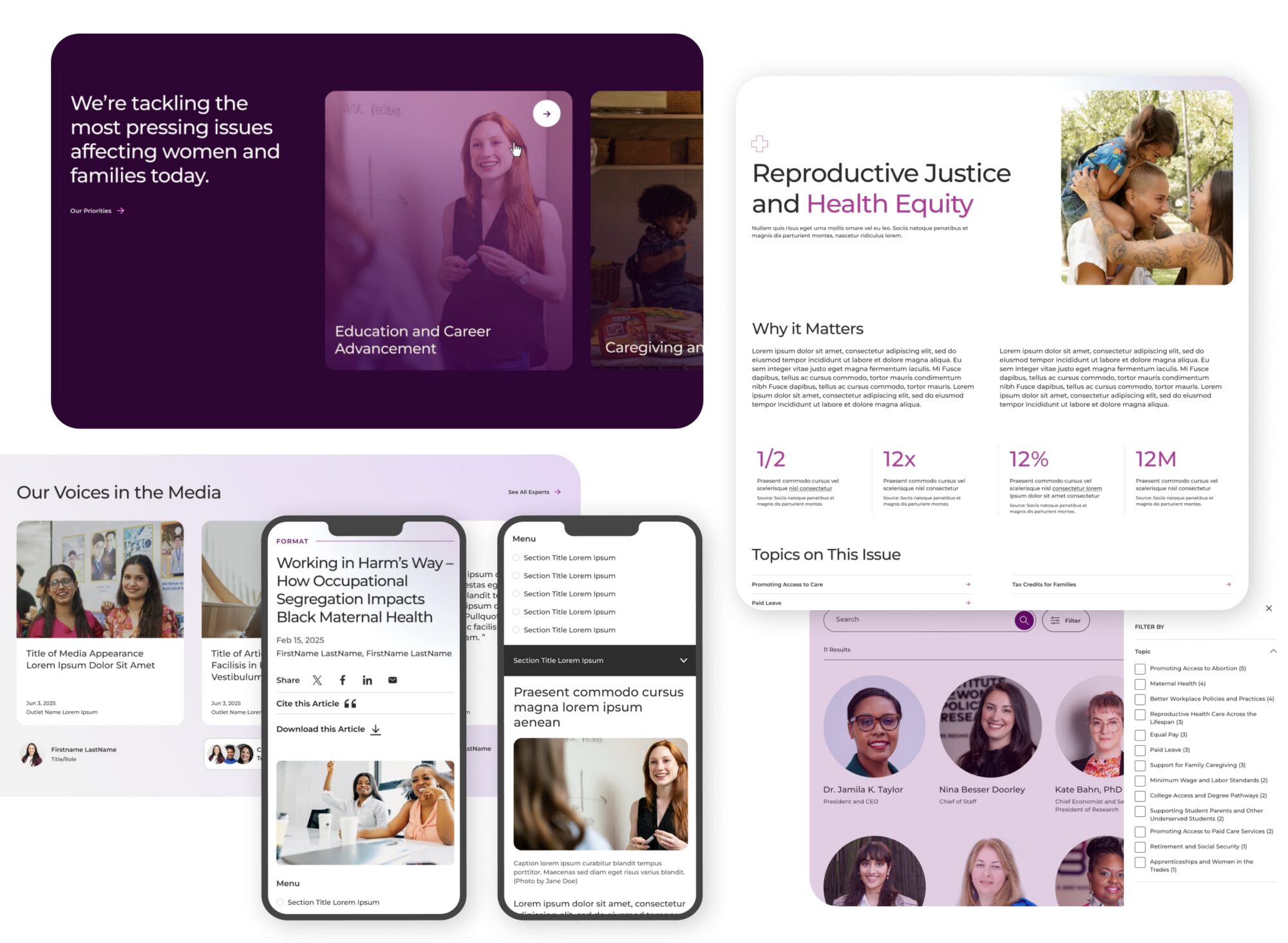
Issue area pages, previously thin taxonomy pages, became full storytelling hubs, surfacing featured research, policy context, related experts, and clear calls to action in one place.
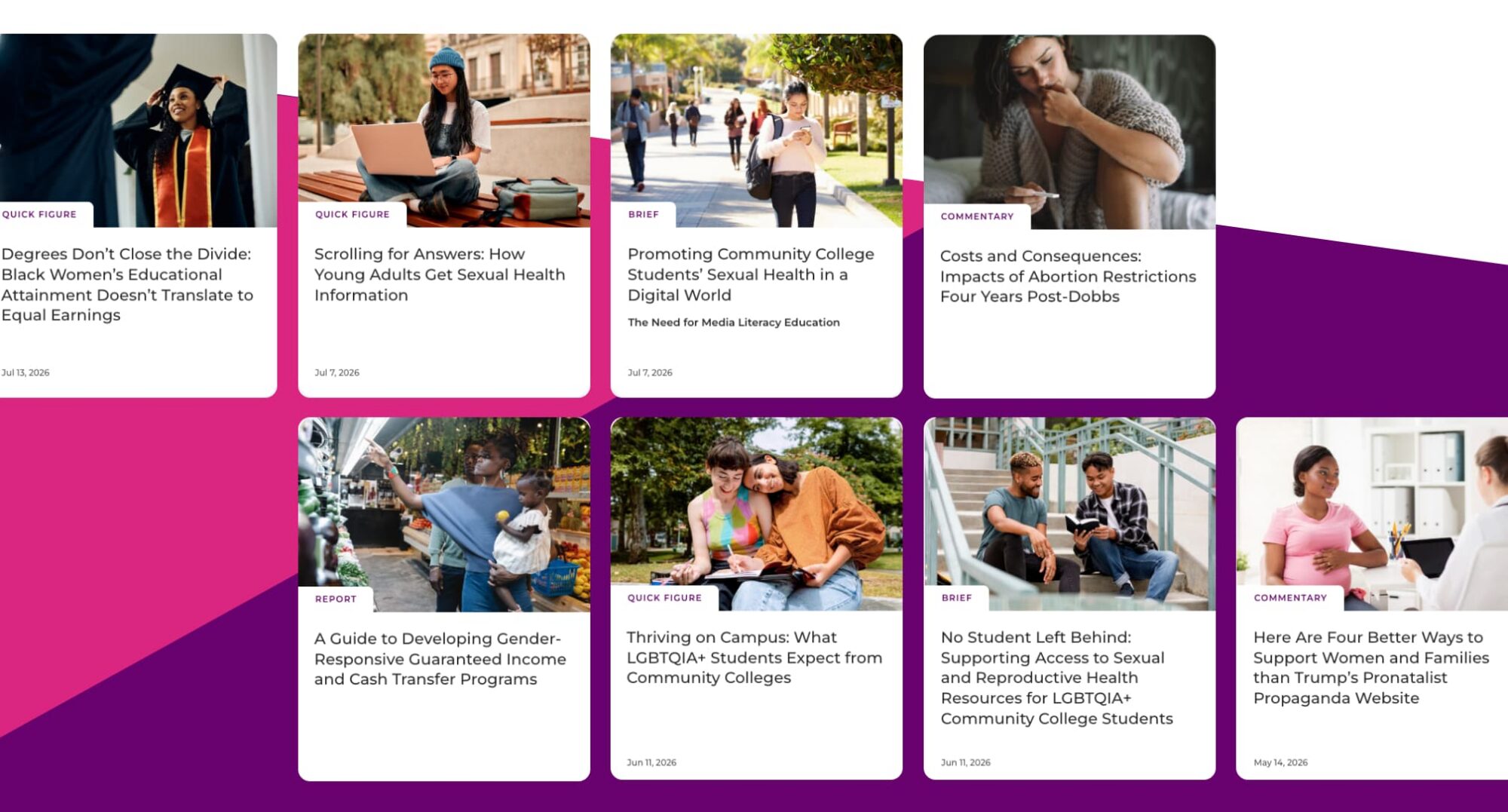
A single, unified research landing page replaced the site’s fragmented entry points, with robust filtering by topic, publication type, date, and audience type. Audience-specific pathways were built into the homepage and primary navigation, giving policymakers, advocates, journalists, and researchers distinct entry points to the content most relevant to their work.
Experts are elevated as thought leaders, and gives their audience a way to connect with them.
The Technical Foundation
Teal built the new site on WordPress as a multisite installation, integrating iwpr.org and statepolicyactionlab.org into a shared platform, reducing maintenance overhead and creating durable infrastructure for IWPR’s expanding digital presence.
Key features include:
Purposeful taxonomies that power content relationships across the site, enabling recommended reading pathways that connect related research and keep users engaged.
A comprehensive component library that enables authors to build visually rich, story-driven report pages without developer help. IWPR can now shift from static PDF publishing to a web-first model, where reports are browsable, searchable, and designed to meet audiences where they already are.
A cite this article tool that makes it easy for advocates, journalists, and researchers who rely on IWPR’s work to actually reference it.
Technical SEO that’s baked into the site architecture itself, making sure all content is well structured and indexable by search engines and LLMs.
Accessible from the ground up and fully optimized for mobile.
Teal automatically migrated over 4,000 individual pieces of content, replacing bloated categories and tags with a more manageable and purpose-built set of taxonomies created specifically for relating old and new content to relevant IWPR priorities, topics, and initiatives.
Migration
4,229Content pieces
660Taxonomy terms
8New content types
Links
Year of Completion
2026
Issues
Services
Project Team
Teal Media is a woman-led creative agency that builds brands and websites for nonprofits, foundations, and mission-driven organizations. We have a core presence in Washington, DC and Detroit, MI.
A website strategy and design system for one of the country's oldest animal welfare organizations, built through rigorous user testing and handed off to AWI's own developers to build.
Let’s do this.
The part where we ask you to cough up your email. So we can discuss all the amazing things we’re gonna do together. No pressure. Really.