As design practitioners and artists, how do we navigate the current and future landscape of generative AI? We begin by acknowledging that it exists and it’s not going anywhere. And then we ask how we can use it responsibly for ourselves, our peers, and our clients.
Artists have historically gotten the short end of the stick when it comes to earning money. Design software has made it easier for anyone to create, but it has also caused the public to undervalue talent, effort, and experience. Now that AI companies are helping themselves to others’ intellectual property, they’re siphoning commissions into their already deep pockets. Why would customers pay for original art when they can create their own in a heartbeat?
This is due, at least in part, to our need for instant gratification. Recent technology has in many ways enhanced how we experience food, travel, entertainment, and interaction with other people. But it has also given us the idea that we don’t need to hone our skills and deepen our knowledge to be good at something. We believe we can become an expert just by reading a couple of articles or watching a few videos online.
How do we approach generative AI in design at Teal?
Our perspective is shaped by our tagline, “Creative with a conscience.” Its meaning applies to our client base of nonprofits, think tanks, advocacy organizations, foundations, and social change groups; to our values of expertise, experience, inclusivity; and to our commitment to deliver on time and on budget (we are after all, in the service business).
We use AI to elevate our work, not replace it.
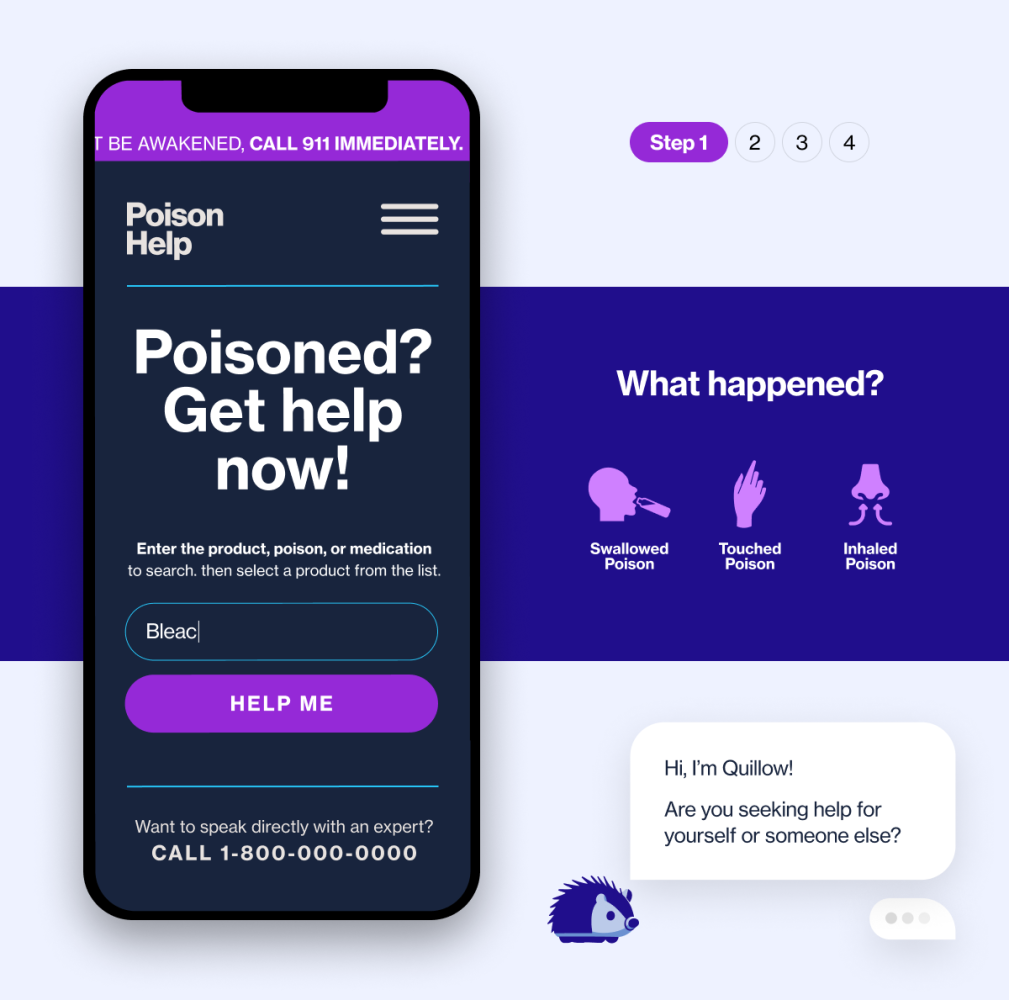
Recently we were asked about chat features by a prospective client. We wondered what the chat would look like if we paired it with a friendly supporting character. We used ChatGPT to suggest appropriate animals and names. We then used Adobe Illustrator’s generative AI tool to create a few cute icons that we edited and redesigned to match the brand.
We successfully used these AI tools to demonstrate an idea, not a final deliverable. As a step in the creative process, it allows us to see beyond the limits of our imagination.
We embrace craftsmanship.
Generative tools such as DALL-E and Midjourney are popular for generating art based on a user’s prompts. It might not be immediately obvious to non-artists, but the output usually has a “glossy sheen” and sameness that is unmistakably AI (at least for now). Backlash has been swift and fierce. Renowned “Spirited Away” director Hayao Miyazaki even calls it an “insult to life itself.”
We greatly value craftsmanship at Teal. One of our key differentiators is bespoke strategy and design, honed by experience, effort, collaboration, and practice. Each of our designers brings a unique approach and style. We are minimalists, maximalists, cartoonists, graphic artists, animators, font snobs, and hard critics of ourselves. We believe that art and design are an endeavor that is inherently human-first and technology-second.
We are responsible adapters.
We don’t know for certain how much more generative AI is going to grow – some are speculating that it’s already at its peak. But as it stands, there are significant concerns that give us pause:
- It’s ethically fuzzy: Generative AI is built on uncredited work, and existing laws aren’t equipped to deal with the copyright infringement challenges it poses. Because the AI companies don’t disclose the source of their datasets, we might already be unwilling contributors to it.
- Its dataset can be biased: Generative AI exacerbates actual racial and gender disparities in the real world. As thoughtful partners to our clients, we have to exercise caution, be inclusive, and apply context whenever possible when creating images or graphics that represent people.
- It comes with a heavy environmental cost: A recent study found that a 100-word email using ChatGPT requires 519 ml of water. Environmental justice and protection are paramount to our values and those of our clients, and this concern is top of mind as we consider when and how to use generative AI.
- It’s not exactly trustworthy: Consumers have low emotional trust in AI products. OpenAI is no longer a nonprofit. AI companies are opaque about the true source of their datasets. And the tools are prone to hallucinations and fabrications. This is a major concern for our clients, many of whom are experts and advocates who are fighting for truth, transparency and equality.
How do we apply this in our work?
Here’s a breakdown of practical applications of generative AI and AI-integrated tools that we use:
Creating illustrations or graphics
- Tool: Midjourney
- Teal’s point of view: We never submit unedited, AI-generated images as final deliverables. We modify at least 50% of the initial idea without the help of AI. All final assets include an editable source file.
Enhancing/modifying existing image assets (i.e., colorizing an image; subtracting or adding missing portion of a photo such as cropped shoulder, head/hair; generative fill/expand)
- Tool: Adobe Photoshop
- Teal’s point of view: Generally OK to use.
Sourcing photos
- Tool: Adobe Stock
- Teal’s point of view: We do not use AI-generated “photos.” We only use real-life images taken by a photographer.
Generating icons/vector assets
- Tool: Adobe Illustrator
- Teal’s point of view: We never submit unedited, AI-generated images as final deliverables. We modify at least 50% of the initial idea without the help of AI. All final assets include an editable source file.
Copywriting, idea generation
- Tool: ChatGPT
- Teal’s point of view: We modify at least 50% of the initial idea. We use it for a piece of a larger deliverable, not to produce a deliverable on its own.
As the suite of available generative AI tools grows, we’ll continue to assess them based on our shared values. Only then we can determine when and how to use them as an addition to our creative toolbox.

